
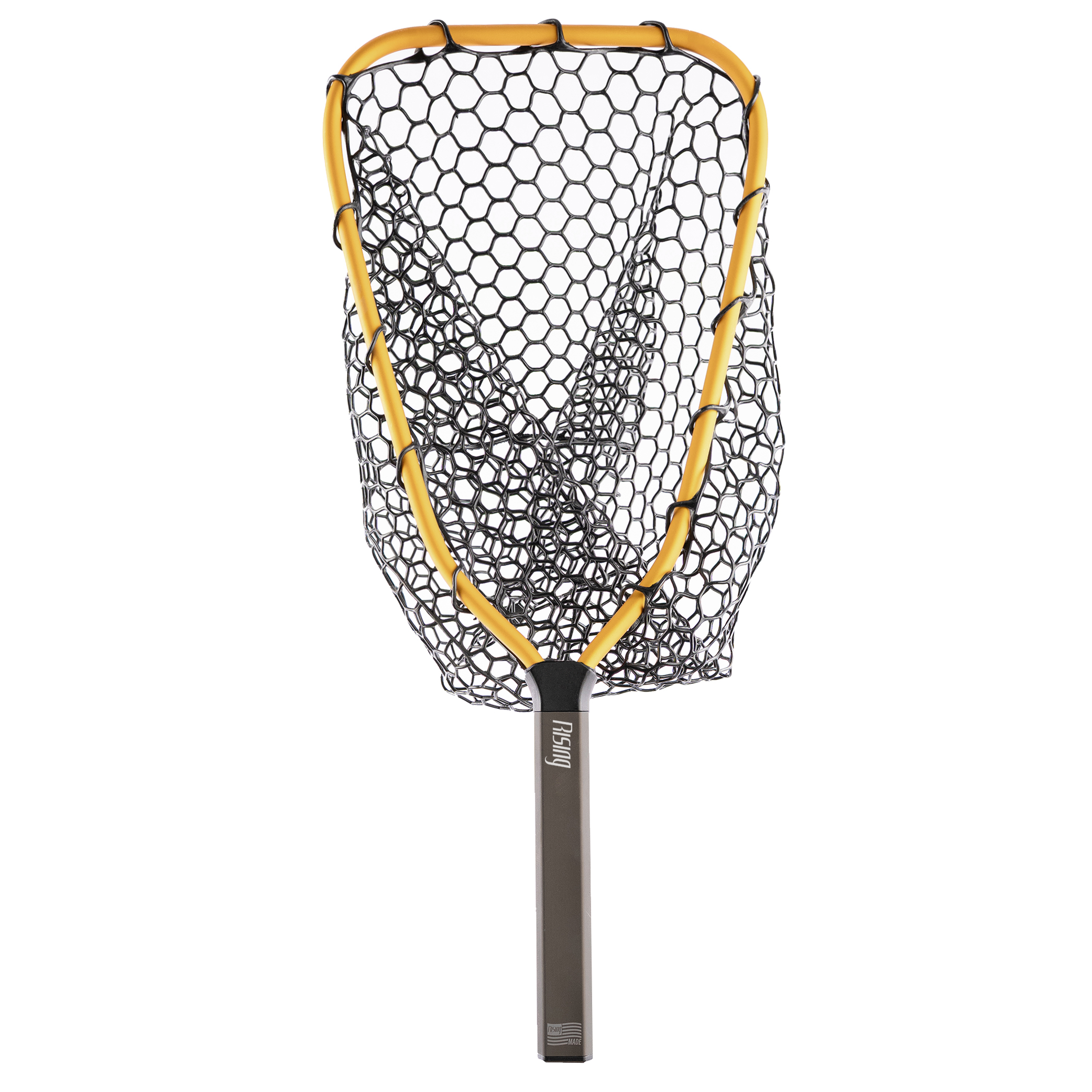
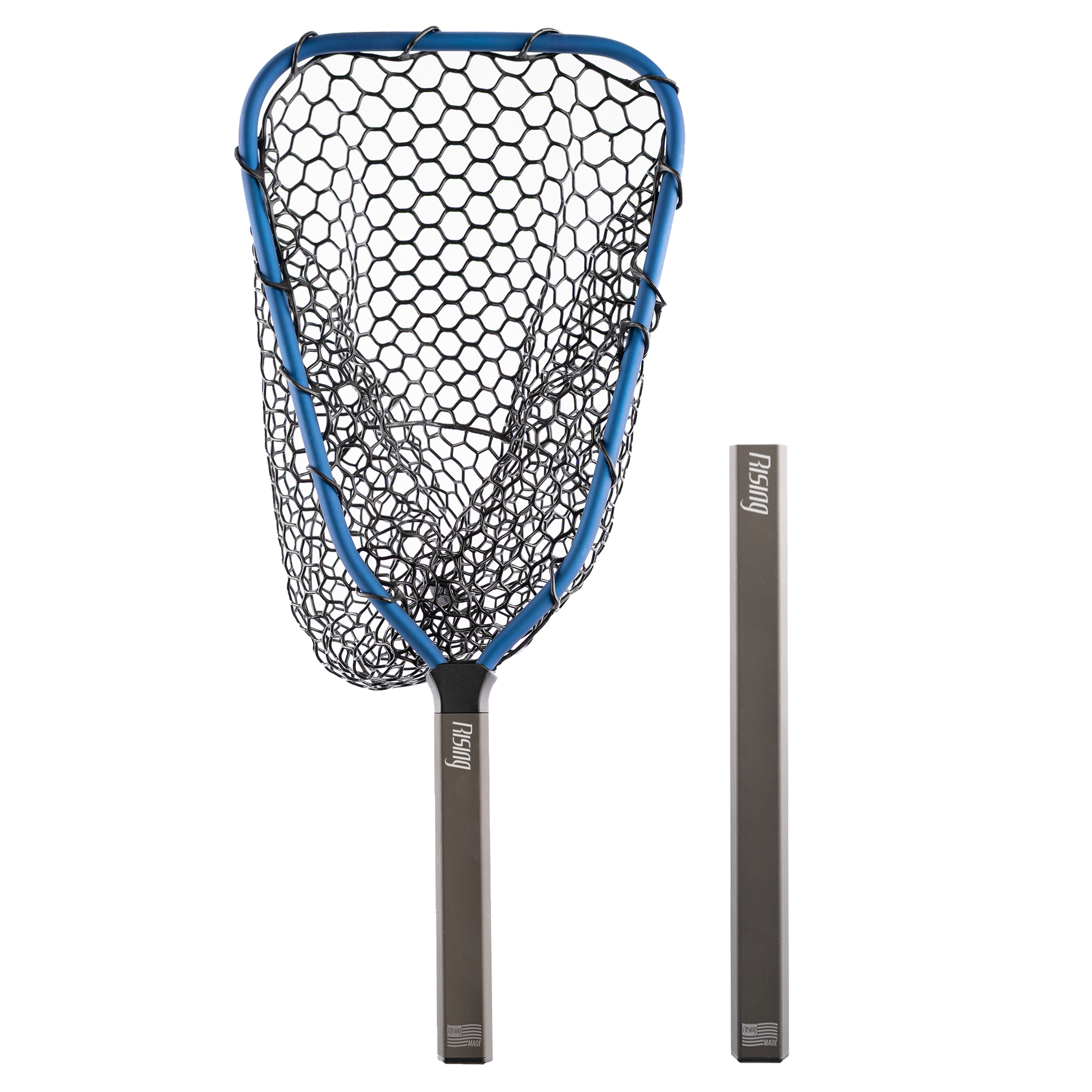
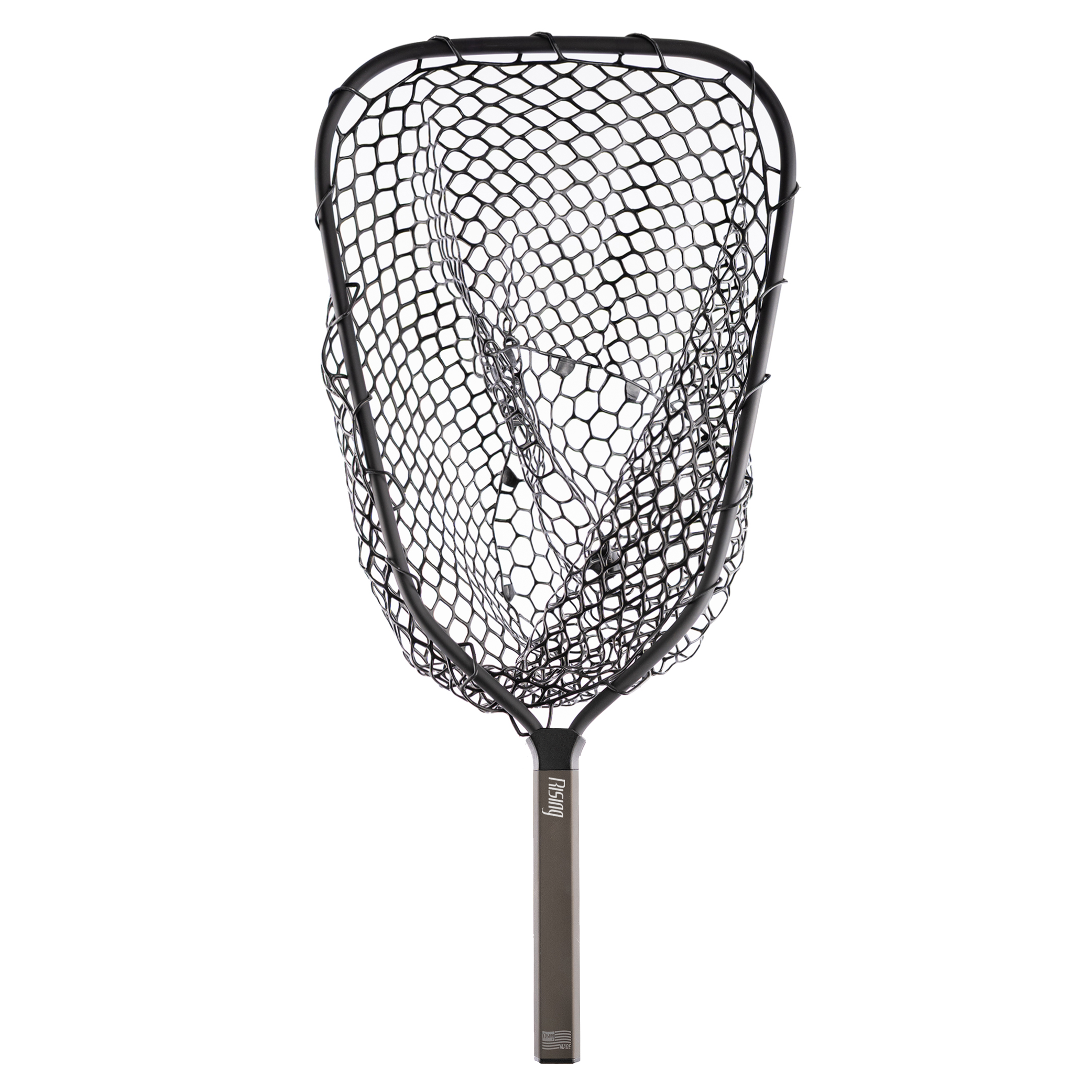
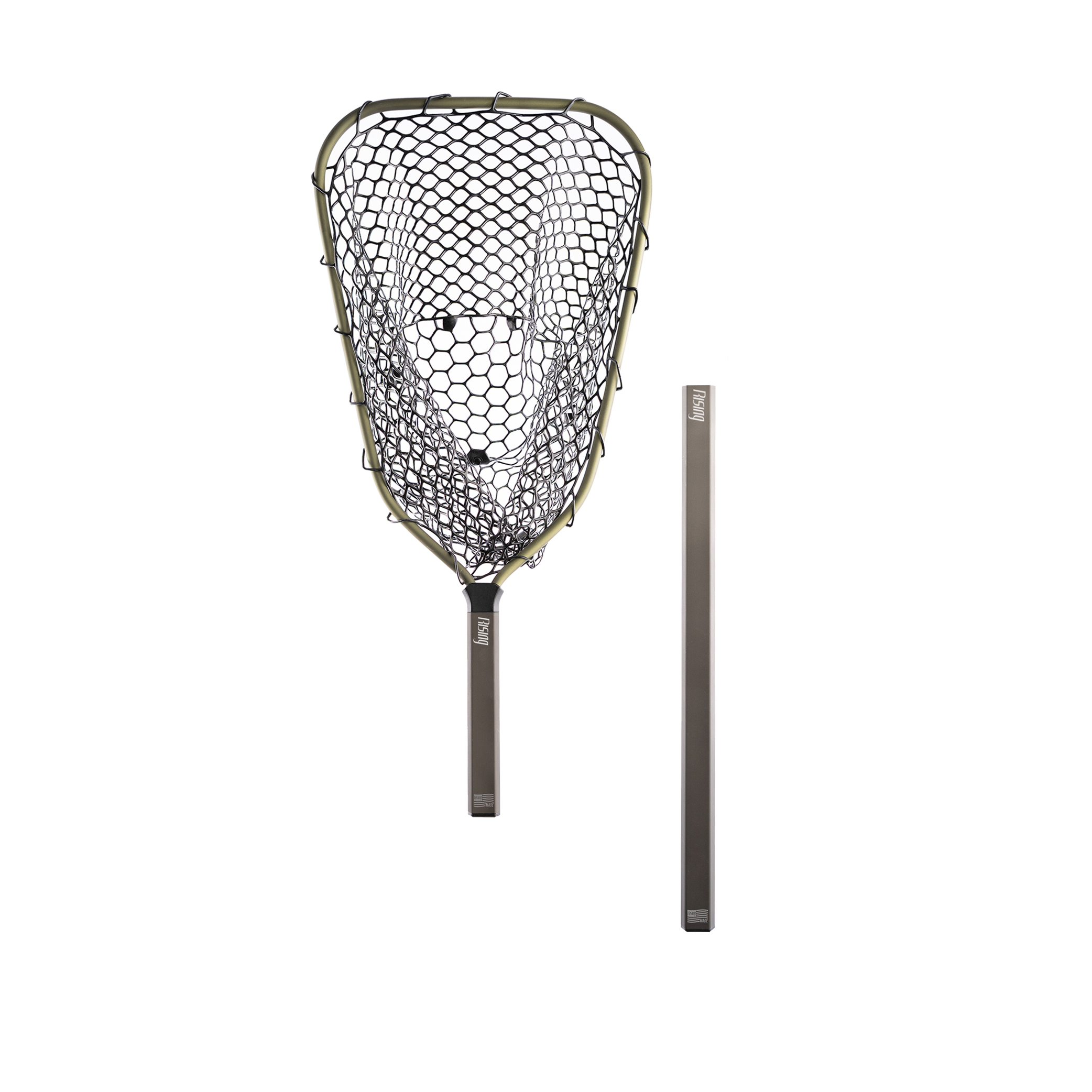
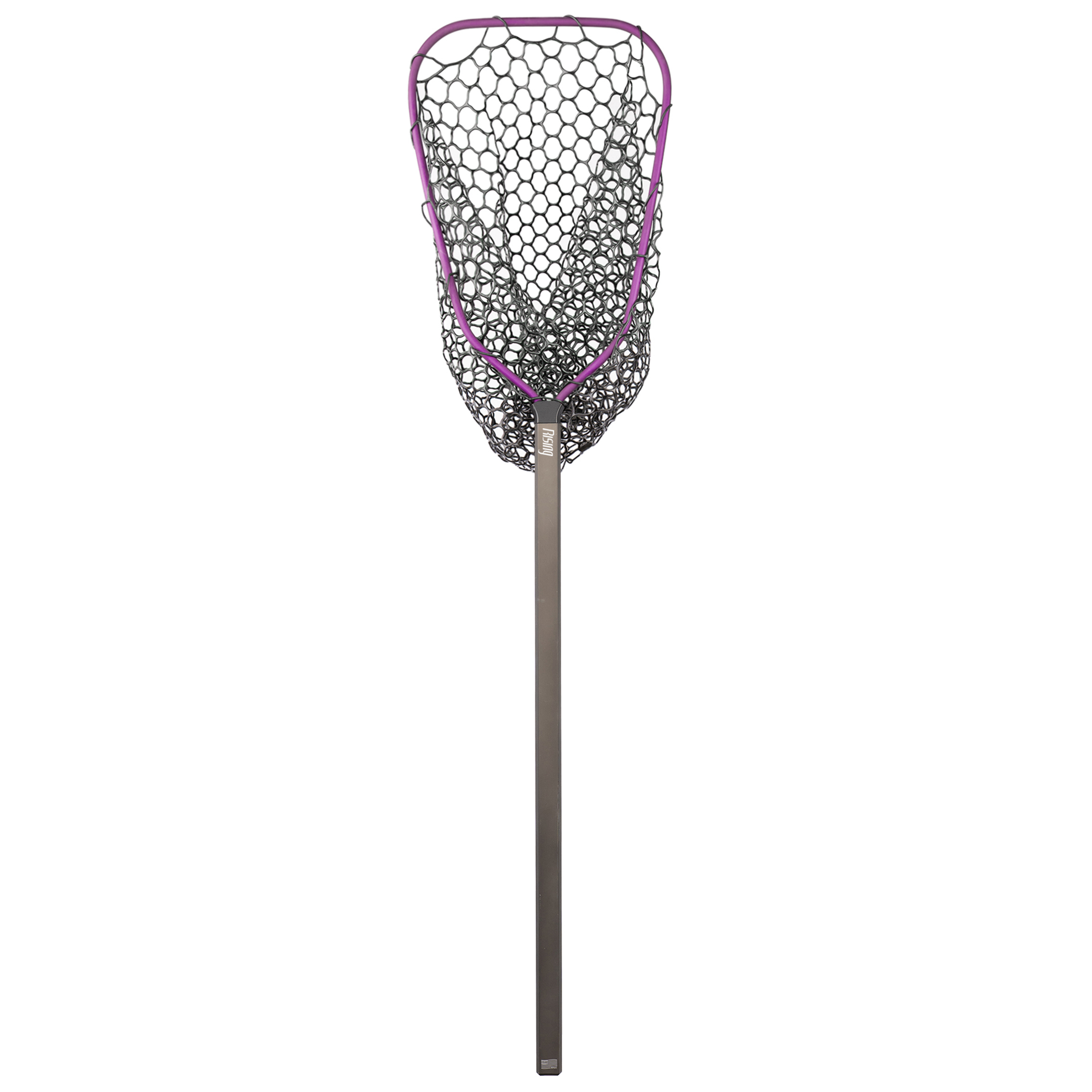
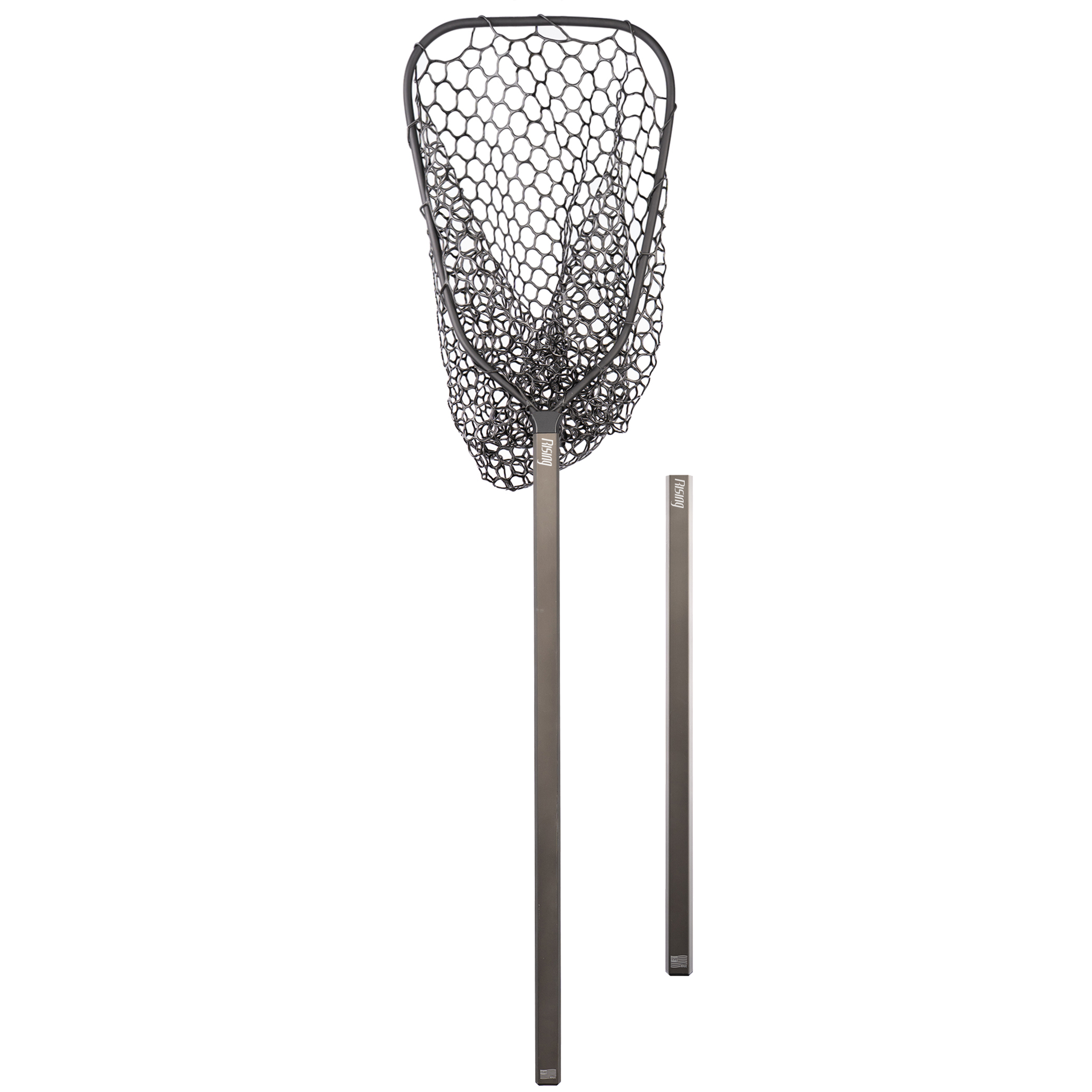
Choosing the Right Fly Fishing Net
These nets are made to be used.
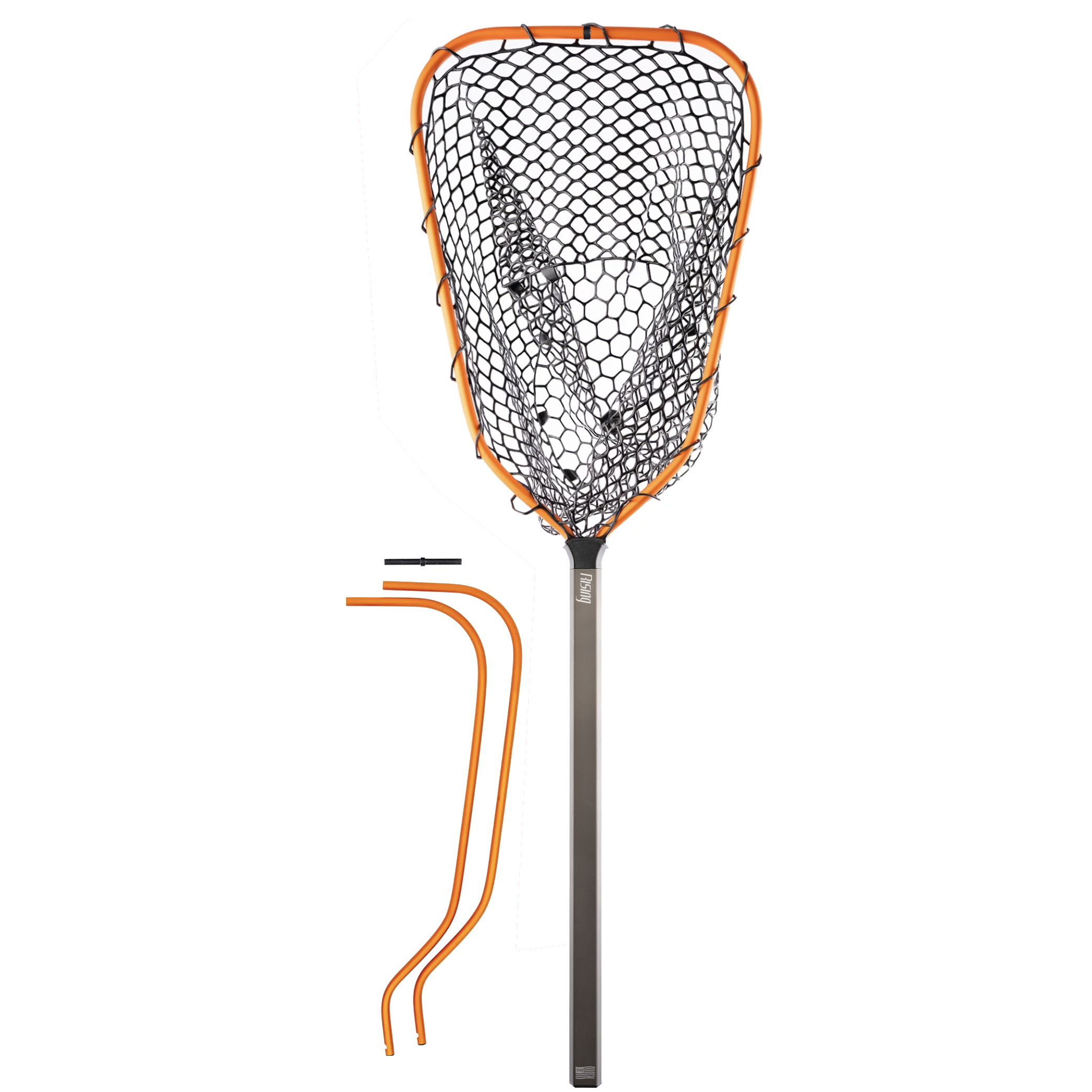
Water, fish, and fishing styles all change, and your net should too. With modular, repairable parts, you can dial in a setup that matches how and where you fish.
What Makes a Good Fly Fishing Net
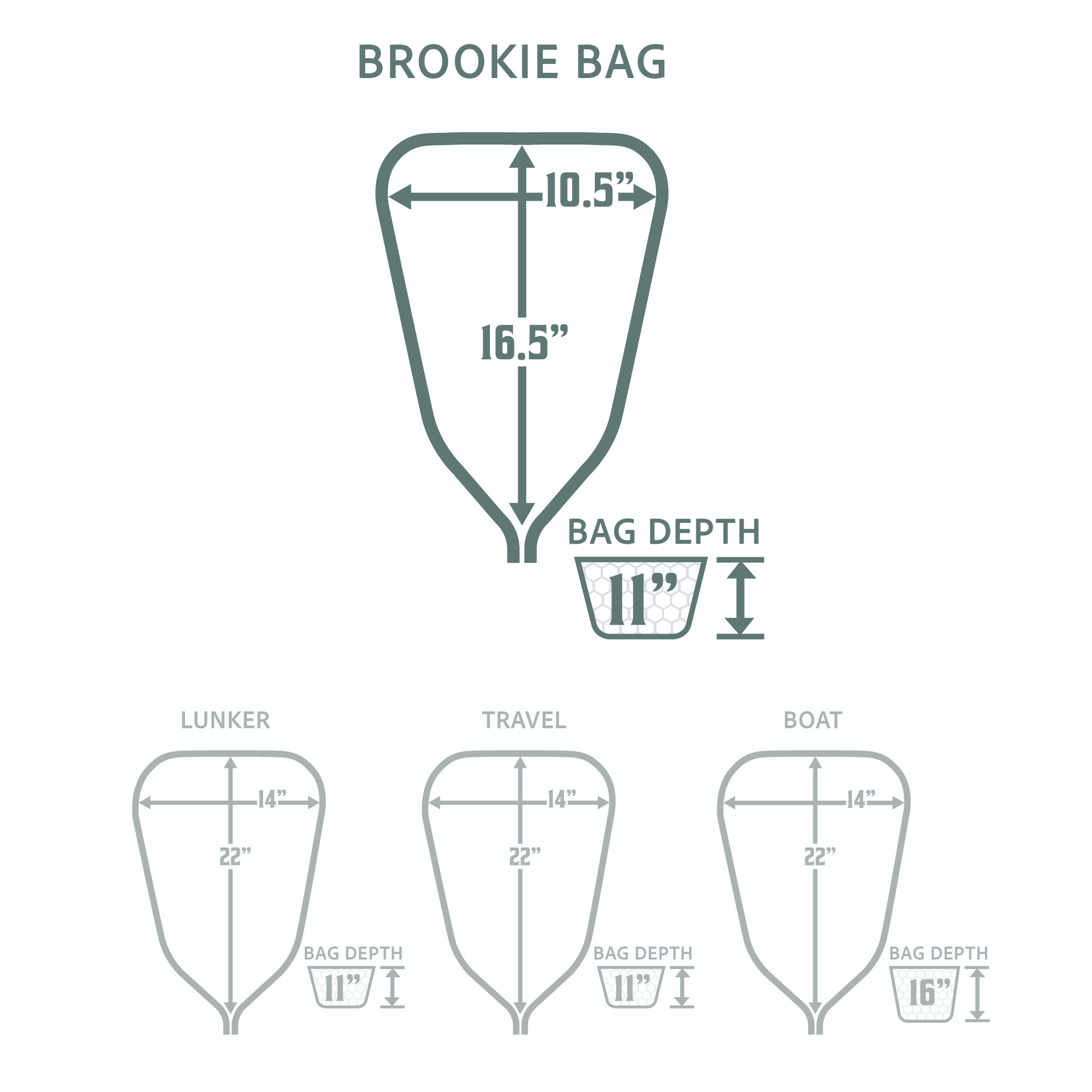
This guide breaks down hoop geometry, handle length, net bag depth, and the practical differences between wading nets and boat nets. It will help you match a landing net to your home water and the species you target.
If you want the short version: pick a hoop that fits your typical fish, a handle that fits how you move through water (or a boat), and a bag depth that lands fish quickly without extra handling.
More Resources
If you want to understand how fly fishing nets affect fish safety, reduce handling time, and support clean catch and release, explore these companion articles:
Our nets are part of a system built for long-term ownership. Replace the bag, change the handle, keep fishing. Built to be repaired, upgraded, and trusted on real water.
Community Casts
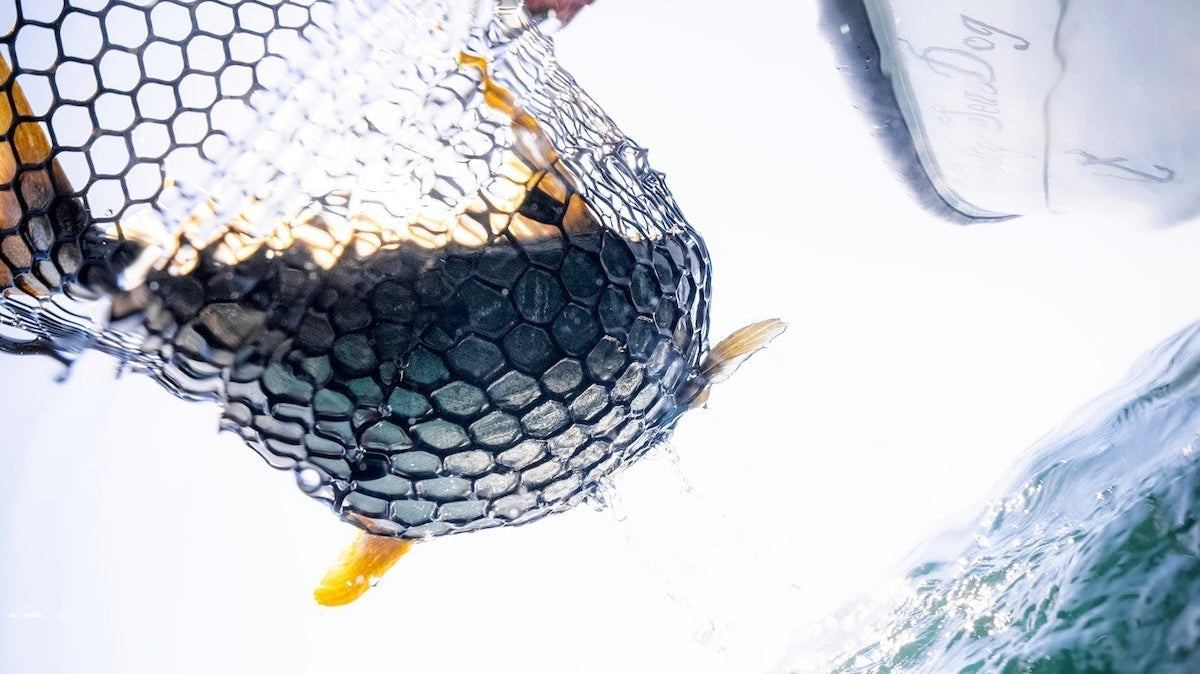
Depredation (AKA The Tax Man)
Depredation happens when a predator targets a fish that is tired, disoriented, or slow to recover. Anglers often see it with sharks eating hooked bonefish or tarpon, but the more common version occurs after release when a weakened fish cannot swim away quickly enough. Extended air exposure and exhaustion make released fish vulnerable. Using a net to shorten the fight, keep the fish wet, and support proper recovery gives it the strength it needs to escape predators once it swims out of your hands.
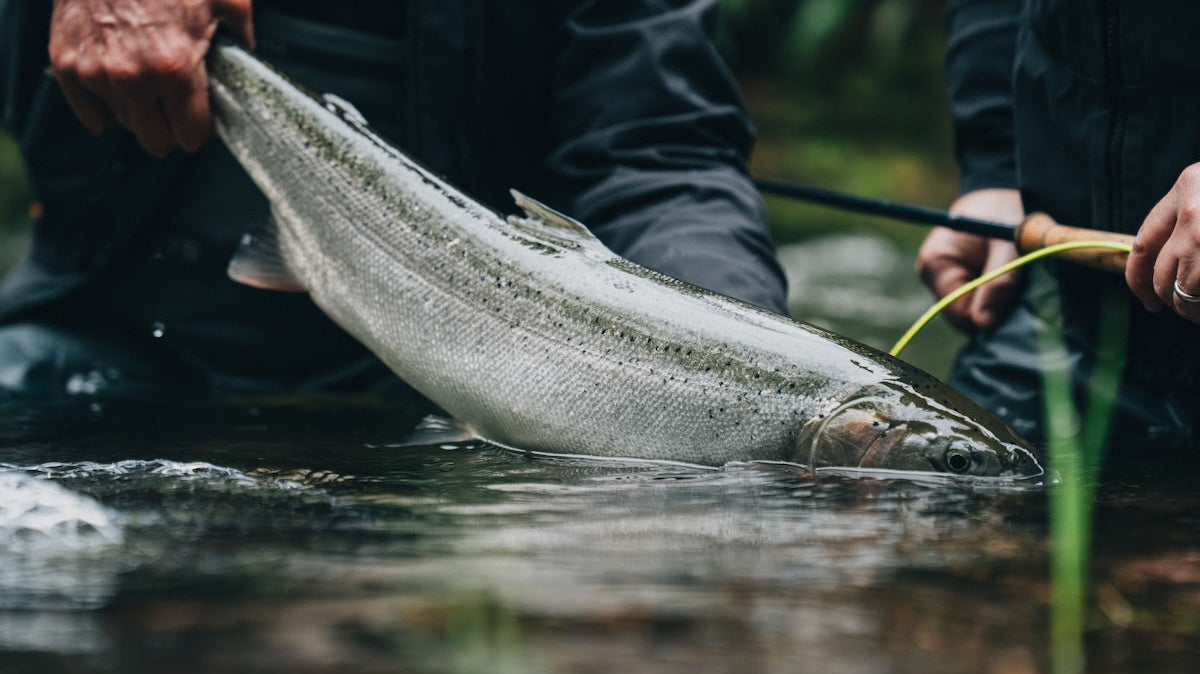
Catch & Care
Catch and release is only part of the story. What matters most is how the fish returns to the river. Catch & Care is about landing fish quickly, keeping them in the water, and handling them gently so they can recover and swim away strong. Small choices in the moment make a big difference for the fish and for the rivers we love.
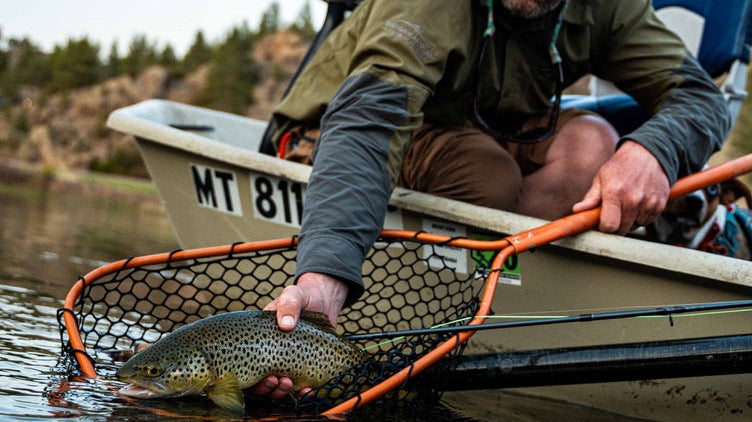
The Role of Basket Depth in Fish Recovery
Basket depth plays a critical role in how a fish recovers after landing. A deeper basket allows the fish to settle, remain upright, and stay submerged while stress levels drop and oxygen balance returns. By reducing thrashing, air exposure, and instability, the right basket depth supports faster recovery and a stronger swim away after release.

